GREEN PALLETS
The Sustainable Solution for Your Business
Manufacturer of eco-friendly pallets from agricultural biomass. Formaldehyde-free. No heat treatment. CO₂-negative.



Sustainable Solution for Your Business.
Manufacturer of eco-friendly pallets from agricultural biomass. Formaldehyde-free. No heat treatment. CO₂-negative.
Bridging The Gap Between Sustainability & Logistics.
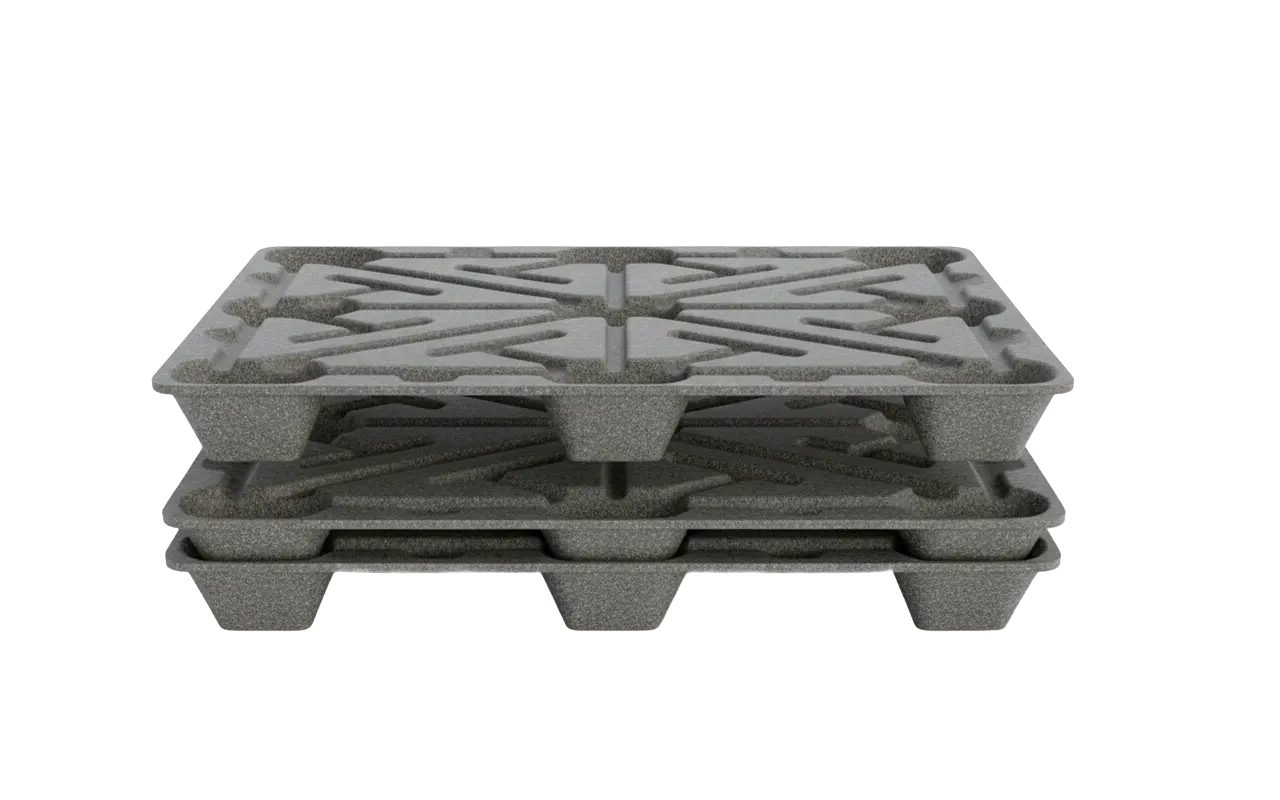
What makes us different?
Our pallets integrate seamlessly into supply chains across various industries.
They optimize processes, meet your specific requirements, and deliver high efficiency while contributing to environmental protection.
Export & one-way shipping
Wood-free. Pest-free. ISPM15 Exempt. Lower weight means lower transport costs. Easy handling for you and your logistics partner."
FMCG & Fast-Moving Warehouses
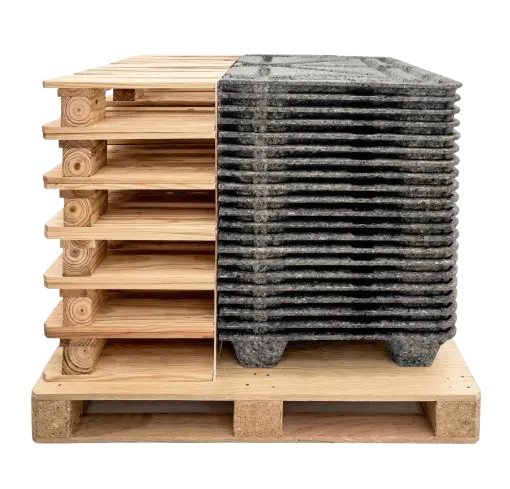
With their lightweight, innovative, and compact design, they save up to 60% of space in warehouses and transport vehicles, while simultaneously reducing storage and transport costs.
Sensitive Goods & Production
100% free of formaldehyde and toxins. No nails or splinters. Designed for safer and easier handling, protecting both your employees and your packaging.
Future-Proof Companies
Our biomass pallets directly reduce supply chain Scope 3 emissions and ensure full compliance with PPWR requirements. EU-compliant.
Cost Efficiency
Made from agricultural residues, our pallets provide you with stable and consistent pricing, free from the market fluctuations typical of traditional timber.
Working in a different sector?
Our eco-friendly pallets can be adapted to different industries, offering tailored solutions for any supply chain.
Why Green Pallets?
The EU Packaging and Packaging Waste Regulation (PPWR) is shifting from voluntary to mandatory.
Materials used, local origin, recyclability, reusability, and carbon performance are becoming strict requirements, meaning transport and packaging can no longer rely on traditional materials.
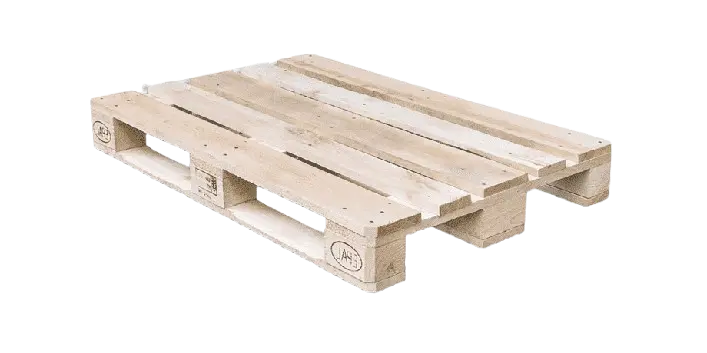
Nailed pallet
- Dynamic Load: up to 1500 kg
- Weight: 21-25 kg
- Binder: possible formaldehyde
- Raw material: Wood
- Sustainability: ★★☆
- Recyclability: ★★☆
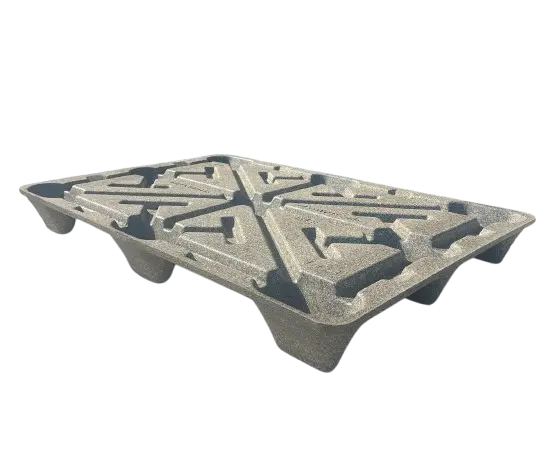
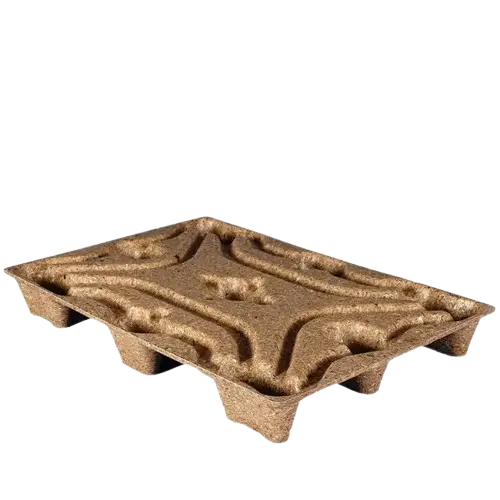
Green Pallet
- Dynamic Load: up to 1500 kg
- Weight: 10-15 kg
- Binder: formaldehyde free
- Raw material: Sunflower husk, Wheat straw
- Sustainability: ★★★
- Recyclability: ★★★
Molded wood pallet
- Dynamic Load: up to 1250 kg
- Weight: 10-15 kg
- Binder: formaldehyde
- Raw material: Wood fiber
- Sustainability: ★☆☆
- Recyclability: ★☆☆
Calculate Your Impact
Discover the environmental and financial advantages of switching to Green Pallets.
Transport & Logistics
Up to 80% CO₂ reduction in empty‑pallet transport

units per 1.80 m stack

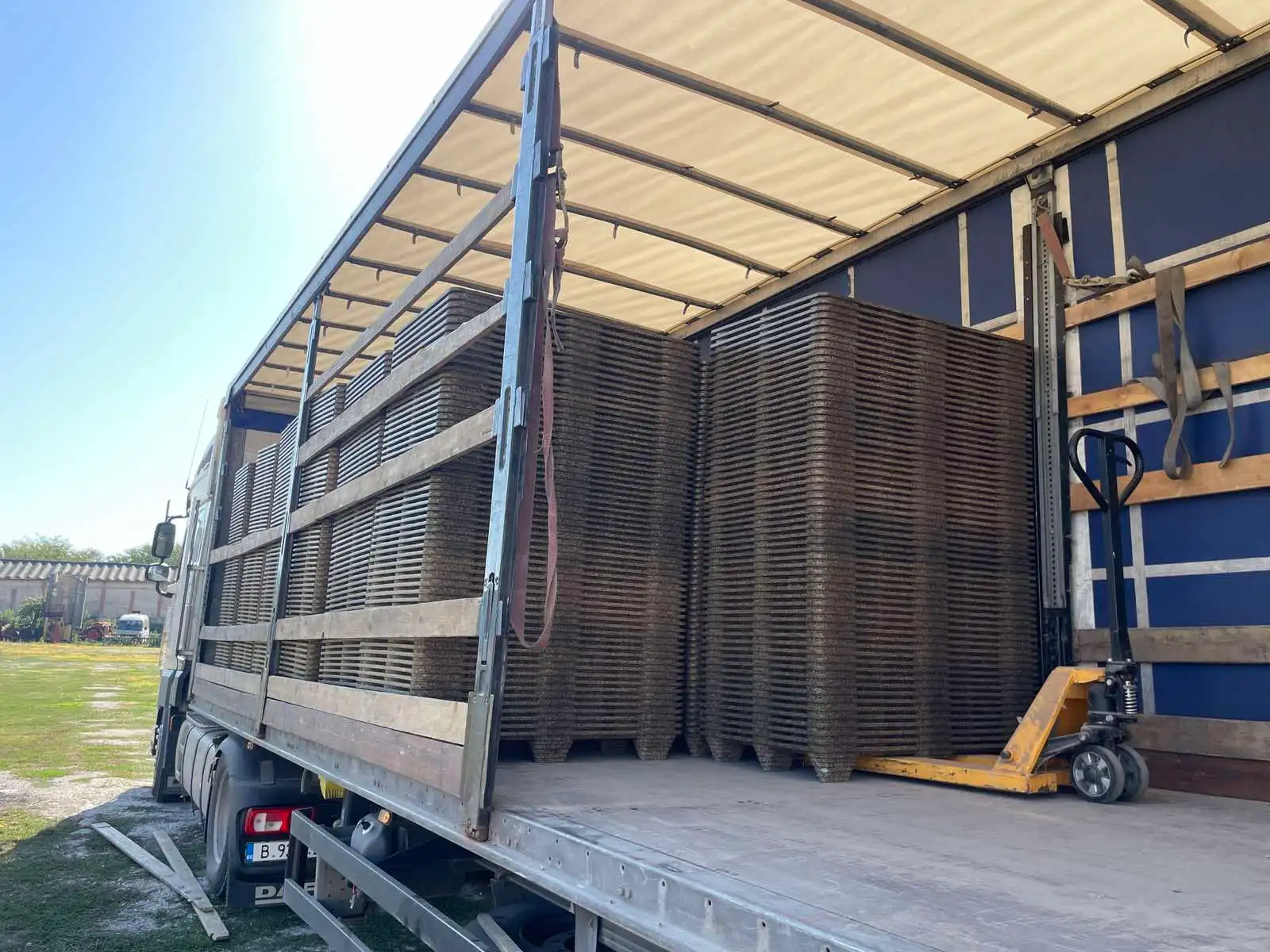
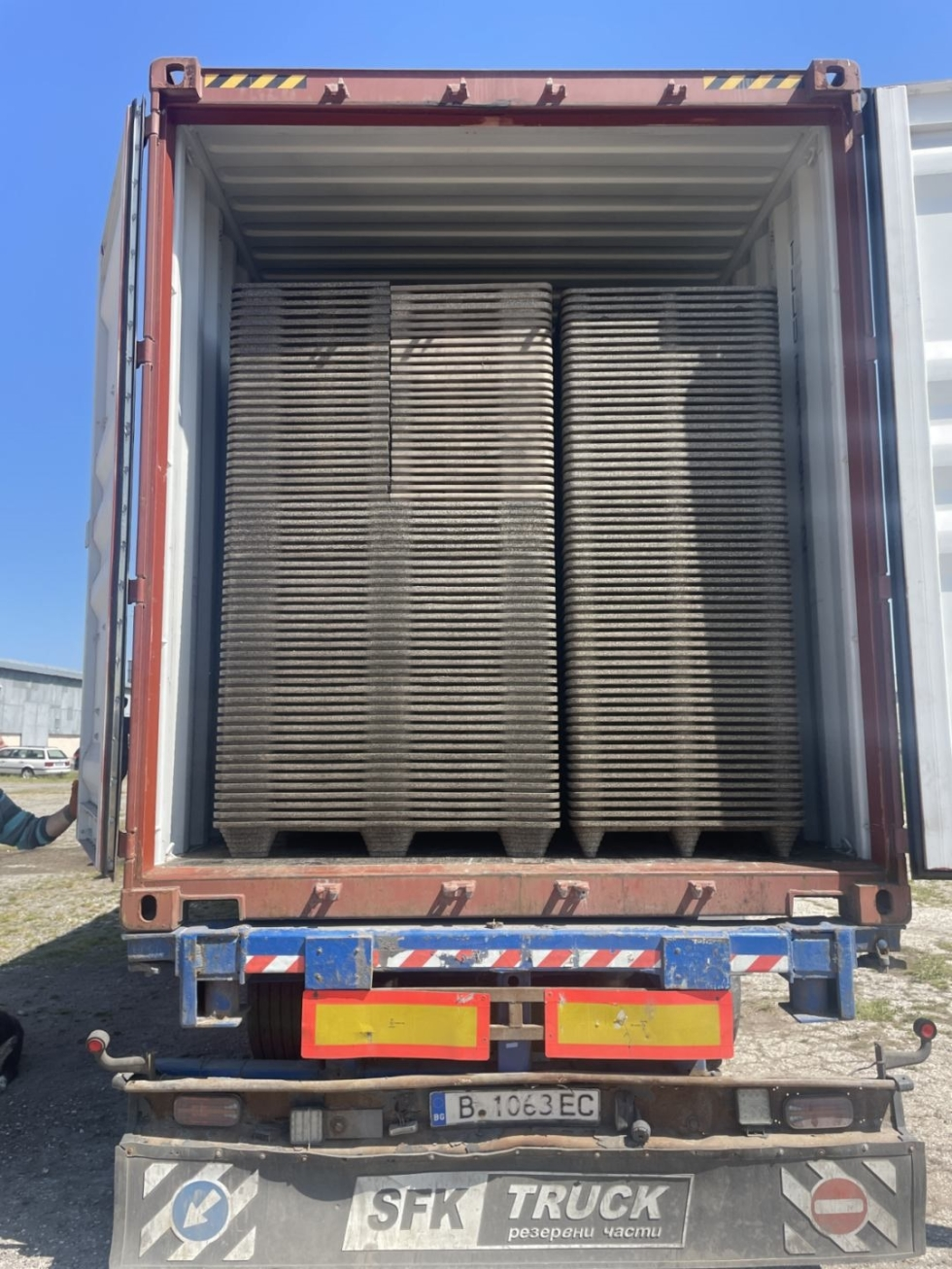
units in a 40’HC container

units in a standard truck
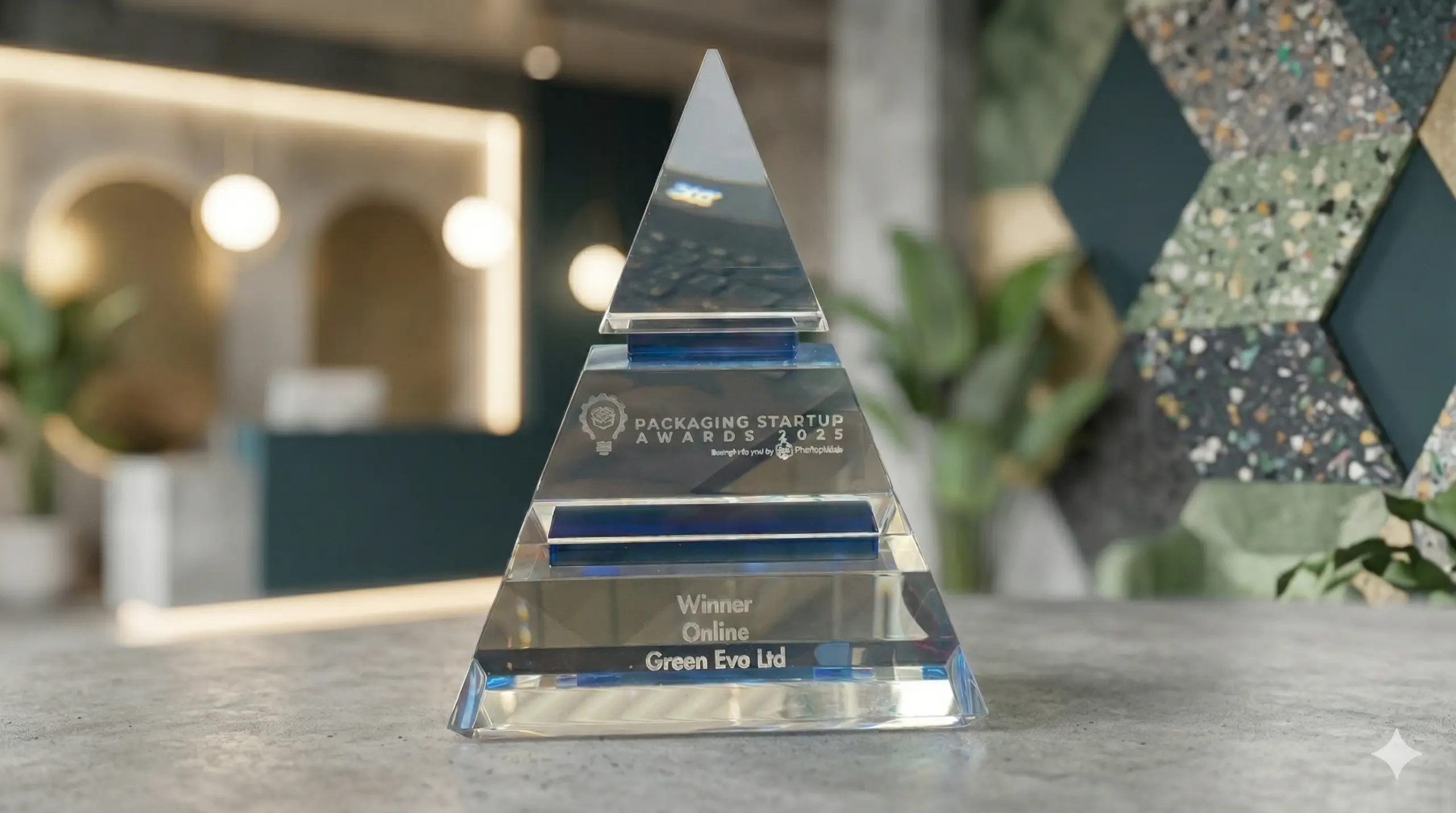
Packaging Startup Awards
 1st Place
Категория
Supply Chain Material and Delivery Improvements
Evaluated by a jury of:
Our mission
Rethinking logistics. Restoring balance.
Protect Our Forests
Each year, approximately 170 million trees are cut down to produce over 1.7 billion wooden pallets – a resource that regenerates slowly and requires at least 20 years to renew.
Utilizing agricultural by-products
A significant share of agricultural plant biomass remains unused or is treated as waste, despite its potential as a sustainable raw material for producing eco-friendly products.
6 core
principles
of our
company
Environmental
Sustainability
We provide sustainable solutions that reduce waste and protect nature – a fundamental principle embedded in our vision for responsible business.
Responsible Production
We reduce CO2 emissions by up to 80% during production compared to wooden pallets. We do not use drying equipment or other machines with high energy consumption.
Innovation
We use unique technology with sustainable materials, offering innovative solutions for logistics and warehousing.
Social Impact
We collaborate with local farmers and communities, create new jobs, and support sustainable development and economic growth in the country.
Global Reach
We share our technology and sustainable products, offering our ecological solutions to companies and markets worldwide.
Economic Impact
Through our sustainable products, we help businesses reduce operational costs and increase their environmental efficiency.
Frequently Asked Questions (FAQs)
Agricultural biomass is the foundation of our production, combining sustainability, efficiency, and local resource potential. It enables us to manufacture pallets with a minimal carbon footprint and maximum value for modern logistics. We use plant biomass from crops such as sunflower, which naturally have low moisture content. This eliminates the need for energy-intensive drying and makes the production process significantly more efficient.
During its growth, biomass captures CO₂ from the atmosphere and stores it in the soil and plant fibers. This makes it an active contributor to climate change mitigation and the transition toward a carbon-neutral industry.
The choice of agricultural biomass is no coincidence – it is annually renewable, readily available, and rich in fibers, making it ideal for composite materials. We are located in a region with well-developed agriculture, giving us direct access to raw materials with a minimal transportation footprint. This enables localized production, lower emissions, and greater traceability of origin.
Agricultural biomass is not merely a raw material – it is a strategic choice for a sustainable future. Through it, we create products that are part of the circular economy, support the decarbonization of logistics, and prove that environmental responsibility can go hand in hand with industrial efficiency
Absolutely. GP pallets are engineered for industrial loads, with a dynamic capacity of up to 1500 kg.
The secret lies in the construction: instead of traditional joints and wooden components, we use sunflower husks or other agricultural biomass, a bio-based binder, and precision pressing technology. This results in a uniform, dense structure that doesn’t split, warp, or absorb moisture.
The result is a pallet that not only replaces wood, but improves upon it – cleaner, more sustainable, and safer. It’s ideal for export, sensitive goods, and all types of logistics.
Depending on the configuration, GP pallets can be equipped with bottom deck boards, making them suitable for racking and roller conveyors. The standard model is optimized for one-way and closed-loop logistics, but thanks to its modular design and optional features, it can be easily adapted to various warehouse systems.
An alternative solution for racking without beams is the static placement of profiles or grids, onto which loaded pallets can be positioned.
Contact our team to discuss customized solutions tailored to your processes and technical requirements.
GP pallets offer high transport efficiency thanks to their compact shape and nested design. A 40’HC container can hold around 1,700 units, while a standard truck can carry up to 1,900. This means twice as many pallets per load, fewer trucks on the road, and up to 50% lower CO₂ emissions when transporting empty pallets. The result: lower costs and more sustainable logistics.
Formaldehyde is widely used in adhesives and wood-based composite materials, including traditional pallets, pressed wood pallets, particleboard, and fiberboard. In many of these, its content can reach 20% or more, posing a serious health risk. Under high temperatures and humidity – such as inside shipping containers – it is released more rapidly, increasing the risk of irritation, unpleasant odors, and long-term health effects. The World Health Organization classifies formaldehyde as a carcinogen, and European regulations impose strict limits on its emissions.
At GP, we don’t just meet regulatory requirements – we exceed them. We use an advanced bio-based polymer with a low content of just 4%, completely free from formaldehyde. This enables us to produce pallets that are safe for people, environmentally friendly, and fully aligned with the principles of the circular economy.
Standard wooden pallets are heavy, prone to splitting, contain formaldehyde-based adhesives, and require nails and mechanical assembly. This makes them riskier to handle and more difficult to recycle.
GP offers a completely different approach.
Our eco-friendly pallets are lighter, have a smooth surface, and are free from formaldehyde. Their compact and innovative design saves space during storage and transport. The absence of nails ensures safer handling and makes post-use recovery easier.
Our eco-friendly pallets are designed with sustainability in mind throughout their entire lifecycle. When damaged, they don’t break into sharp or hazardous fragments like wood or plastic – instead, they degrade in a controlled and safe manner, reducing the risk of injury.
After use, the material can be mechanically shredded and reused as feedstock for composite products, boards, thermoformed items, new pallets, and more. Thanks to their high biomass content, the pallets are also suitable for energy recovery in waste-to-energy facilities.
And since they contain no formaldehyde, no toxic waste is generated-neither during use nor during recycling.